


For regions where winter temperatures stay below freezing for extended periods, the greatest test facing outdoor stone carvings is not wind or snow, but the freeze-thaw cycle. Understanding this mechanism is essential for making sound material choices.
The Freeze-Thaw Cycle: How Stone Cracks
Granite naturally contains microscopic capillary pores. During rain or snow, water seeps into these pores. When the temperature drops below freezing, the trapped water turns to ice, expanding in volume by around 9%. This exerts outward pressure against the pore walls. A single freeze-thaw event may do no visible harm, but after hundreds of repeated cycles, micro-cracks begin to form around the pores. These cracks extend and connect, eventually causing surface spalling or even structural fracture. This is freeze-thaw damage. The destructive force comes not from low temperature itself, but from water freezing and thawing repeatedly inside the stone.
Water Absorption Determines Frost Resistance
Granite is not a uniform material. Water absorption rates vary significantly between different quarries and stone types. Fine-grained granite with a water absorption rate below 0.3% has few and mostly closed capillary pores, making it difficult for water to penetrate — its frost resistance is excellent. Medium-grained granite with a rate between 0.3% and 0.5% offers acceptable frost resistance, though caution is needed in extremely cold and wet environments. Stone with a water absorption rate above 0.5% has a high degree of interconnected pores where water enters easily but escapes with difficulty, substantially raising the risk of freeze cracking.
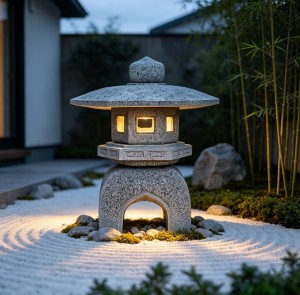
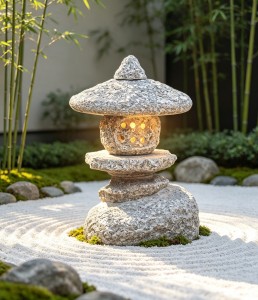
In terms of specific stone types, fine-grained granites such as sesame white and sesame grey generally have low water absorption and rank among the best Chinese granites for frost resistance. Yellow rust stone and some light-coloured granites tend to have higher water absorption due to greater feldspar content and micro-fissures in their mineral composition, and require caution for outdoor use in extremely cold regions. Dark, fine-grained, hard stones such as China black and Shanxi black also have very low water absorption and equally excellent frost resistance, though their price is typically higher than the sesame white series. It is also worth noting that freeze-thaw damage may pre-date quarrying: the surface layers of a mountain, weathered over tens of thousands of years, already contain micro-cracks from water moving in and out over time. When sourcing, it is worth paying attention to the quarrying depth of the raw block. Stone from deeper strata is more reliable in frost resistance than weathered surface material.
The Effect of Surface Finish
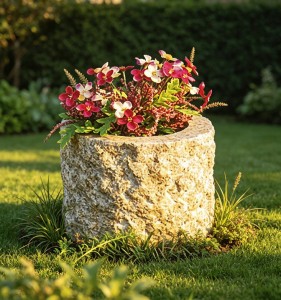
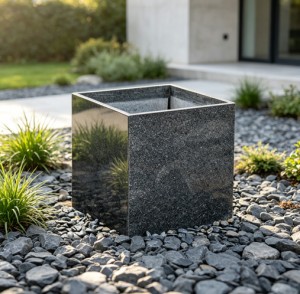
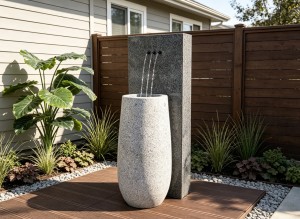
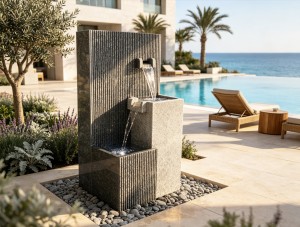
Surface finish directly affects the rate at which the stone surface absorbs water. A polished finish seals the surface pores, making it difficult for moisture to penetrate — this offers the best frost resistance. A flamed finish causes surface crystals to pop off, creating an open, rough texture with increased surface area, which gives water more opportunity to adhere and seep in — frost resistance is secondary. A lychee finish falls somewhere between the two. For outdoor stone carvings in cold regions, it is advisable to use a polished finish on display faces and to keep non-display faces either polished or honed, minimizing the proportion of rough-textured surfaces wherever possible. Outdoor horizontal surfaces — planter rims, fountain bases, stepping stone tops — that are prone to collecting water should ideally be given a polished finish and designed with a drainage slope.
Advice for Buyers
For carved pieces placed outdoors in cold regions, give priority to low-absorption, fine-grained granites such as sesame white, sesame grey, and Shanxi black. Use yellow rust stone, coarse-grained granite, and stone with pronounced veining or colour banding with caution — veins and bands are often concentrations of micro-fissures. When requesting a quotation, clearly inform the supplier of the climatic conditions in the intended location. A responsible factory will recommend suitable stone types and surface finishes based on the application. For winter maintenance, drain standing water from planters and fountains before the freezing season begins, and avoid prolonged snow accumulation around the bases of stone carvings. With the right stone choice and simple winter care, a granite carving can remain in excellent condition for the long term even in a cold climate.
Written By Clara Luo
Post time: Jul-16-2026