


Granite is not the only option for outdoor decorative stone, but its performance across several key indicators explains why it remains the most widely used material for outdoor carvings and landscape stone. This article compares granite with two other common stones — sandstone and limestone — across four dimensions: hardness, water absorption, frost resistance, and colour stability.
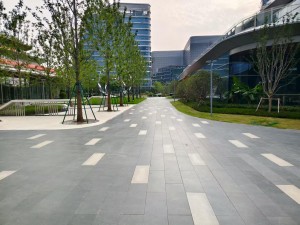

Hardness and Abrasion Resistance
Hardness determines a stone's ability to resist scratching and wear in outdoor use. Granite has a Mohs hardness of 6 to 7. Its main components, quartz and feldspar, are themselves extremely hard, and the stone surface will hardly show any scratches from everyday use. Sandstone typically has a Mohs hardness of 3 to 4. It is composed of quartz sand grains bound together by natural cement, and the bonding between grains is limited, making the surface prone to shedding grit and particles. Limestone also has a Mohs hardness of around 3 to 4. Its main component is calcite, which is relatively soft and can be scratched with an ordinary knife. After a few years outdoors, the edges and corners of limestone pieces will gradually become blunt and rounded. For products where fine carved detail must be preserved over the long term — the texture of a stone lion's mane, the relief decoration on a planter, the robe folds on a Buddha statue — hardness is a non-negotiable indicator.

Water Absorption and Frost Resistance
Water absorption is directly linked to a stone's safety performance in cold climates. Granite's water absorption rate is usually between 0.2% and 0.5%, and can be below 0.3% for fine-grained varieties. Water has difficulty penetrating the stone, so the risk of freeze cracking in winter is very low. Sandstone's water absorption rate is typically between 1% and 5%, and can be even higher for looser varieties. Water easily seeps into the pores between sand grains, and repeated freeze-thaw cycles can cause surface spalling or layered flaking. Limestone's water absorption rate is generally between 1% and 3%. It faces a similar freeze-thaw risk, and its calcite content is sensitive to acidic rainwater, so surfaces exposed outdoors for long periods will gradually lose their smoothness.
For regions where winter temperatures stay below freezing for extended periods, granite is the safest choice of the three. Sandstone and limestone can perform well in warm, dry climates, but in cold, damp environments their service life will be noticeably shorter.
Colour Stability
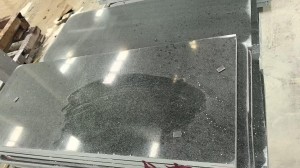
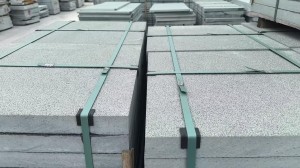
Granite's colour is determined by its mineral composition. The natural colours of quartz, feldspar, and mica hardly change under UV exposure. Dark-coloured granite shows almost no visible colour change after decades outdoors. Lighter varieties may develop a very slight warm tonal shift over time due to oxidation of trace iron elements on the surface — this is normal ageing for a natural material. The colour of sandstone depends on mineral impurities in its cement. Iron-cemented sandstone may darken outdoors over time due to oxidation. Limestone is usually light grey or off-white. After long outdoor exposure it may darken slightly due to dust accumulation and surface micro-etching. The overall change is modest but irreversible.
Maintenance Requirements
The three stones differ considerably in their day-to-day maintenance needs. Granite is virtually maintenance-free; an occasional rinse with clean water is all that is required. Sandstone surfaces tend to accumulate dust and grow moss more readily, requiring more frequent cleaning, and care must be taken during cleaning to avoid damaging the loose, grainy surface. Limestone is sensitive to acidic substances — vinegar, lemon juice, and chlorine-based cleaners will all corrode the stone surface — so maintenance requires particular caution.
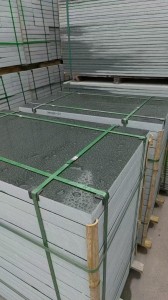
In summary, granite's mainstream position in outdoor decorative stone is grounded in objective performance. Sandstone and limestone each have their own distinctive texture and aesthetic value, and each is suitable for particular climates and styles. But for outdoor carvings and landscape stone that must retain fine detail, withstand harsh weather, and keep maintenance costs low, granite remains the most cost-effective choice.
Written By Clara Luo.
Post time: Aug-06-2026