


Whether you’re caring for balcony plants at home, adding greenery to office spaces, or designing large-scale commercial landscapes and courtyard gardens, mulching is a detail that is often overlooked—yet it can both promote plant growth and enhance visual appeal. Among all types of mulching materials, natural pebbles stand out as the top choice for home gardening and commercial landscape design, thanks to their excellent cost-effectiveness, wide applicability, and long-lasting durability.
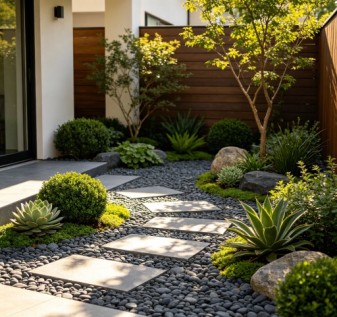
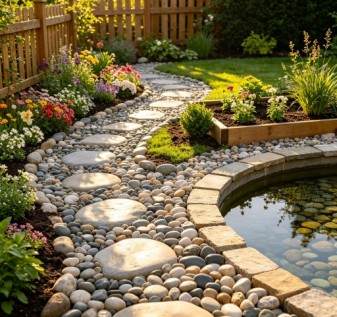
1. Eliminate Mess and Significantly Reduce Cleaning Burdens
Mud splashing onto desks, floors, and walls during watering is a common frustration for anyone caring for plants. Natural pebbles form a dense protective layer over the soil surface, completely preventing mud splashes at the source. Their smooth, hard surface resists dust and dirt buildup, and can be easily restored to a clean, fresh state with a simple water rinse or a wipe with a damp cloth.
Unlike organic mulching materials such as wood chips, coconut coir, or tree bark, pebbles do not rot, mold, or harbor bacteria, so they require no frequent replacement. Compared with artificially dyed pellets, they do not peel or crumble, maintaining a tidy appearance year-round after a single installation.
2. Safeguard Plant Health and Lower Maintenance Costs
Healthy roots are the foundation of thriving plants, and pebbles create an optimal growing environment for root systems. The appropriately sized gaps between their smooth, uniform particles ensure good air circulation in the soil, preventing root hypoxia. At the same time, pebbles effectively lock in moisture and reduce evaporation, cutting watering frequency by 30%–50%.
In addition, the soil surface covered by pebbles receives limited light, which naturally suppresses the germination of weed seeds. This covering also blocks pests such as fungus gnats and black flies from laying eggs, eliminating the need for frequent weeding and pesticide applications. As a result, plant care becomes simple and effortless.
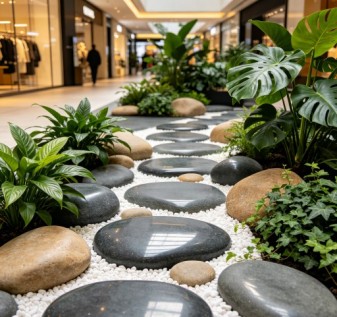
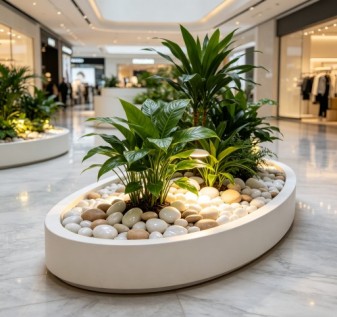
3. Versatile Natural Texture Enhances Aesthetics in All Spaces
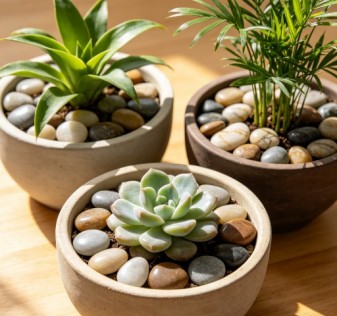
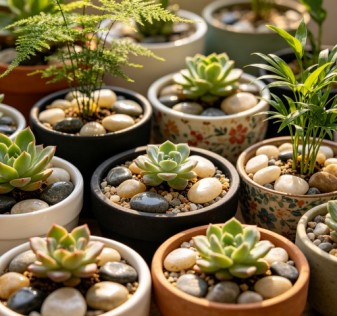
Unlike ordinary artificial gravel or garishly colored plastic pellets, each natural pebble has been shaped by millions of years of water erosion and natural polishing, giving it unique textures and forms. Available in a rich range of colors—from pure white, warm beige, and light gray to deep black—pebbles blend perfectly with various interior decoration and landscape design styles.
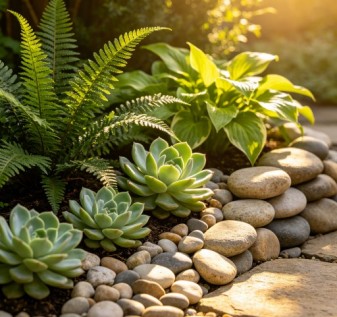
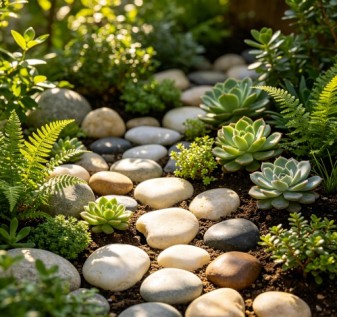
Light-colored pebbles brighten spaces and suit modern minimalist and Nordic styles; dark-colored pebbles highlight plant vibrancy and are ideal for Zen courtyards and industrial-style spaces; mixed-color pebbles create a rustic, natural pastoral atmosphere. Beyond plant mulching, pebbles can also be used for flower bed edging, water feature revetments, and courtyard pathways, achieving a unified, harmonious, and attractive overall landscape.
4. Sturdy and Durable for Long-Term Use with One Installation
Natural pebbles are formed from hard stones such as granite and quartzite through natural weathering. They are extremely tough, compression-resistant, impact-resistant, and shatter-resistant, with no cracking, chipping, or deformation. With excellent weather resistance, they retain their color and shape even under harsh conditions including strong sunlight, severe frost, and heavy rain, offering an outdoor service life of decades or even centuries.
For large-scale projects such as commercial plazas, residential greening, and park landscapes, the exceptional cost-effectiveness of pebbles is unmatched. Requiring no ongoing maintenance or frequent replacement, they deliver long-lasting beauty and functionality with a single investment, making them the most economical landscape material.
5. 100% Natural and Safe for the Whole Family
Sourced from natural riverbeds, natural pebbles undergo no artificial chemical treatment and contain no synthetic dyes or toxic substances, making them truly eco-friendly materials. They are non-toxic to plants, do not alter soil pH levels, and are completely safe for children and pets—their smooth, edgeless surfaces prevent scratches. Furthermore, pebbles are recyclable, produce no construction waste, and have zero negative impact on the ecological environment. They are an ideal choice for residences, kindergartens, pet-friendly cafes, hospitals, schools, and other public spaces.
Practical Installation Tips
Indoor potted plants and desktop greenery: Use small pebbles of 0.5–1 cm, laid 2–3 cm thick, for a neat, attractive look that does not overwhelm the plants.
Commercial lobbies, large planters, and flower beds: Use medium pebbles of 1–3 cm for a bold, unified appearance that can withstand moderate foot traffic.
Outdoor courtyards, pathways, and water features: Use large pebbles of 3–5 cm for enhanced durability, slip resistance, and a stronger natural texture.
Pot bottom drainage layer: Place extra-large pebbles of 5–10 cm at the bottom of flower pots to effectively prevent soil from clogging drainage holes and avoid root rot caused by waterlogging.
Wriiten By Clara Luo
Post time: Apr-17-2026