


Your customer has purchased a granite carving and placed it in their home or garden. A few months later, they may come back to you with a few questions. Here are the three most common ones, along with the answers you can give them.

Question 1: The stone surface has gathered dust or grown moss. How do I clean it?
After some time outdoors, granite carvings may accumulate dust or develop moss on the surface. This is normal and not a product quality issue.
Routine cleaning is very simple: rinse with clean water and scrub with a soft-bristled brush. For stubborn dust, wash with a soft cloth and a mild soapy water solution, then rinse thoroughly with clean water. Do not use strong acidic or alkaline cleaners, and never use steel wool — acidic cleaners can corrode the stone surface, and steel wool will leave scratches that cannot be repaired. If the carving is placed in a damp environment such as under a tree or beside a wall, moss may regrow periodically. Scrubbing with clean water once every six months to a year is enough to keep it looking tidy.
If moss covers a larger area, spray a diluted neutral cleaner onto the moss, leave it for a few minutes, scrub with a soft brush, then rinse thoroughly with clean water. When rinsing, start from the top and let the water flow downwards to carry away the dirt, avoiding rubbing the surface repeatedly to minimise wear. After rinsing, it is best to wipe away any excess water with a dry cloth to reduce water spots.

If your customer happens to like the antique look that moss brings, they can also choose to leave it. Many Japanese gardens deliberately cultivate moss on stone lanterns and water basins. This is an aesthetic preference, not a sign of neglect.
Question 2: There are small scratches or minor chips on the surface. Can I fix them myself?
Minor scratches or small edge chips may occasionally occur during transport or daily use. For light scratches on a polished granite surface, you can try gently buffing them with fine sandpaper, then rinsing with clean water. The scratches will usually become much less visible. However, scratches deeper than one millimetre are not recommended for DIY repair. Attempting to buff them out without proper technique may enlarge the damaged area, resulting in uneven gloss or surface depressions.
For small chips on edges, if the chip is very small and not in a prominent position, it usually does not affect the overall appearance or the service life of the piece, and it is best to leave it. If the chip is in a highly visible spot and detracts from the look of the piece, contact the original supplier to discuss professional repair options. Stone repair requires mixing matching stone powder with a specialist adhesive, filling the damaged area, and then sanding it smooth. Filling the chip with ordinary household glue usually leaves a noticeable mark and is not recommended.

Question 3: Does outdoor stone carving need waxing or a protective sealant?
No, it does not. Granite itself is dense and has a very low water absorption rate. It does not require waxing or sealant application for protection. Applying a stone sealant without professional assessment may alter the breathability of the stone surface, preventing internal moisture from evaporating normally and causing it to accumulate within the stone. In the long term, this can actually lead to new problems.
If the carving is placed in an area exposed to heavy cooking fumes, such as next to an outdoor barbecue, regular wiping with warm water and a small amount of neutral cleaner will remove grease and oil. Granite has very good colour stability and generally does not fade noticeably after many years outdoors. Different colours of granite may change to varying degrees outdoors: dark stones show very minimal change, while light stones may undergo a very slight tonal shift after years of sun and rain. This is normal ageing of a natural material and does not affect its performance or longevity.
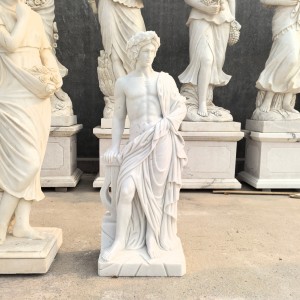
A Few Reminders
Do not scrape the surface of the stone carving with hard or sharp tools. Do not allow corrosive liquids (such as vinegar, lemon juice, or chlorine bleach) to sit on the stone surface for extended periods. If the stone carving develops a structural crack or extensive damage, do not attempt to dismantle or repair it yourself. Contact your supplier promptly for professional advice. These problems may not be common, but letting customers know about them in advance can help prevent disappointment caused by improper handling.
Written By Clara Luo
Post time: Jul-31-2026