


If you are sourcing religious stone carvings such as Buddha statues, Guanyin figures, or arhats, there are several details worth confirming before placing an order. Unlike planters or fountains, the accuracy of the form and cultural appropriateness of these pieces directly affects their acceptance in the end market.
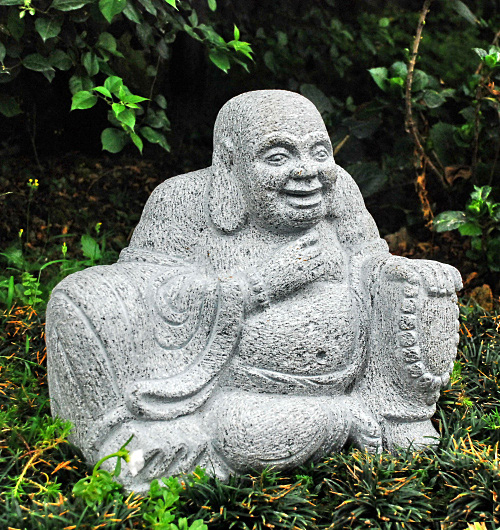
Confirm the Accuracy of the Form and Iconography
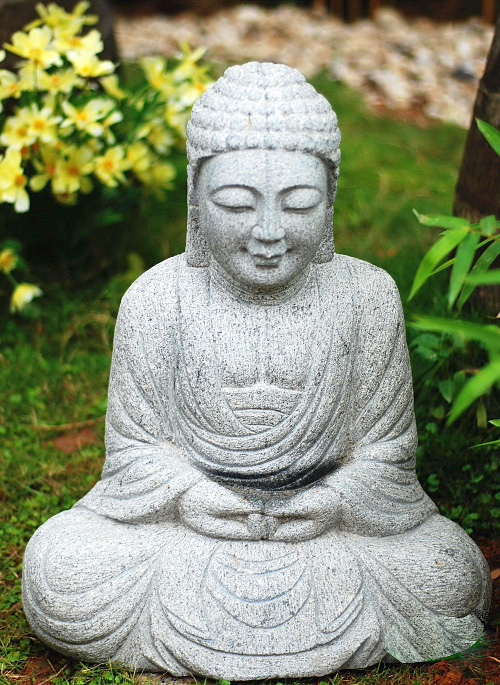
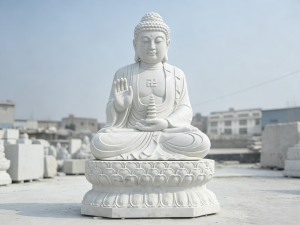
Buddhist sculpture follows a strict set of iconographic conventions. The hand gestures, seated postures, style of the hair, and the flow of the robes all have traditional references — they are not arbitrary decorative choices. Different hand gestures carry different meanings: the earth-touching mudra, the meditation mudra, the teaching mudra, and the fearlessness mudra each have specific religious significance. Whether the posture is the full lotus or the pendent-leg position, whether the hair is depicted in tight coils or smoothed — these details determine what kind of space the statue will be placed in and by what kind of devotee it will be accepted.
If you are providing a photograph or sketch as reference, it is advisable to confirm these iconographic details before commissioning production. Certain subjects, such as Guanyin and arhats, have fixed ritual objects and attributes; omitting or altering them can affect the religious function of the piece. Likewise, the distinction between deities and Buddhas needs to be clear, and the iconography of one religion should not be mixed into a product intended for another.
Regional Aesthetic Differences
Even within Buddhist stone carving, the stylistic differences between Theravada Buddhist regions (Thailand, Myanmar, Sri Lanka) and Mahayana Buddhist regions (China, Japan, South Korea) are considerable. The Theravada style tends to be more slender, while the Mahayana style is fuller and rounder. A Southeast Asian client and a Japanese client may have completely different expectations regarding the proportions of the same Buddha figure. Providing your supplier with clear reference images or stylistic notes when placing an order is more reliable than relying on verbal descriptions alone.
Surface Finish and Colouring
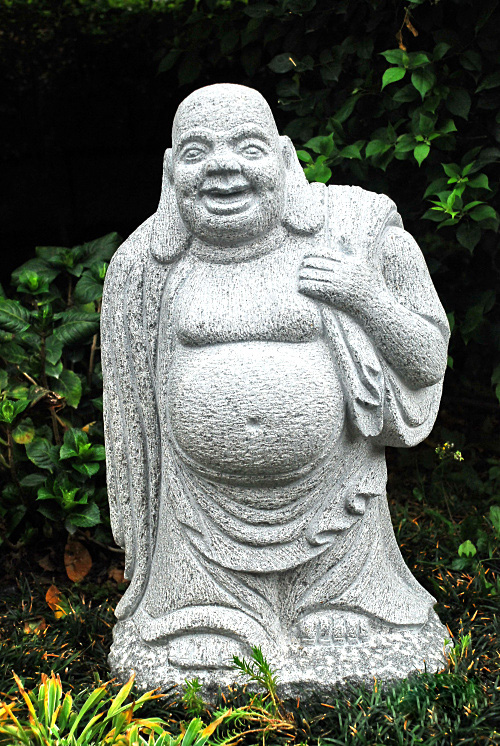
Religious stone carvings generally do not suit a high-gloss mirror polish; a matte or natural surface better conveys the solemnity expected in a religious setting. If the piece needs to be coloured — gold finish on a Buddha, coloured robes, or a white garment on Guanyin — it is best to choose mineral pigments with good weather resistance. For statues intended for outdoor worship, confirming the durability of the painted finish and the long-term maintenance required will be very helpful.
Import Regulations in the Destination Country
Some countries have special declaration requirements for imported religious items and may require a statement of religious use. A small number of countries prohibit the entry of specific religious symbols. It is advisable to check with local customs regarding the relevant regulations before placing an order. You can also ask your supplier to assist in providing the necessary documentation.
Protection During Transport
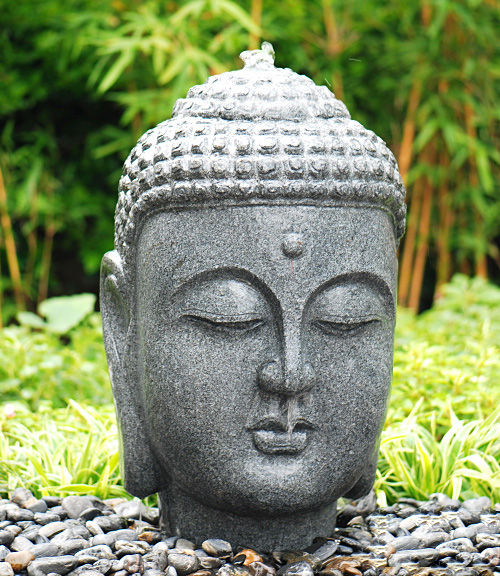
The faces, fingers, and other protruding parts of religious stone carvings are vulnerable to damage during transit. It is advisable to ask your supplier to apply extra soft padding to these areas. Some clients with particular religious customs may request that the area above the Buddha's head be kept clear — this is both a protective measure and a mark of cultural respect. If your end client has such requirements, it is worth informing the supplier during the packing stage.
Understanding Price Differences
The price of a religious stone carving is directly related to the complexity of its form. For a Buddha statue of the same size, the price can vary significantly between a seated and a standing posture, with or without a back mandorla, with or without a niche. When comparing quotations from different suppliers, make sure the comparison is based on identical form specifications, not just on dimensions and stone type.
Sourcing religious stone carvings is, in essence, an act of cross-cultural communication. The more clearly you can communicate your requirements, the better the factory can produce a piece that will satisfy your client.
Written By Clara Luo
Post time: Jul-30-2026