


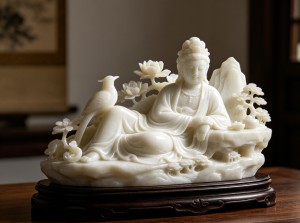
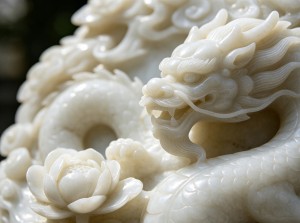
The name is poetic, even misleading. Han White Jade is not jade. Geologically, it is a white marble composed almost entirely of calcite, with a Mohs hardness around 3. A steel knife can scratch it. True jade — jadeite or nephrite — is a silicate mineral twice as hard, utterly different in composition.
Why call it jade? The name is an aesthetic tribute. The stone is exceptionally white, fine-grained, with a warm, waxy luster when polished. It looks and feels like fine mutton-fat nephrite, so craftsmen honored it with the name.
Why the Distinction Matters
For a Western audience accustomed to mineralogical clarity, the name "Han White Jade" can cause genuine confusion. It suggests a precious gemstone. It suggests rarity and extreme durability. It suggests something you might set in a ring.
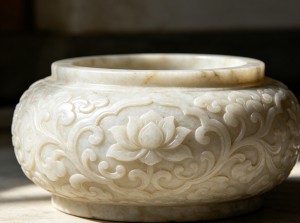
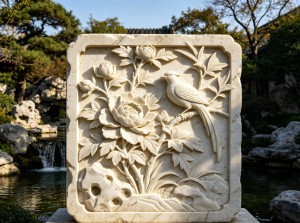
It is none of those things. It is a noble marble, not a precious stone. That does not diminish it. The marble quarries of Carrara gave Michelangelo his medium. The marble of Fangshan gave China's imperial stonecarvers theirs. Both are calcium carbonate. Both have shaped the sculptural imagination of an entire civilization. A material does not need to be rare to be extraordinary.
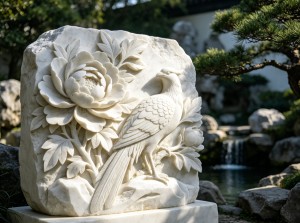
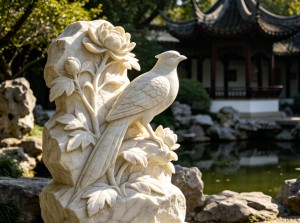
Understanding Han White Jade for what it actually is — a fine white marble with a long history and a beautiful surface — adds more to its story than the mistaken label ever could. It is not a gemstone masquerading as marble. It is marble, honestly and superbly itself.
Written By Clara Luo.
Post time: Jun-10-2026