


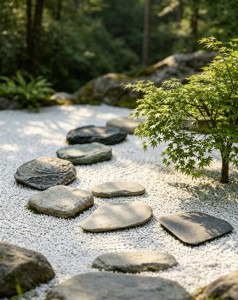
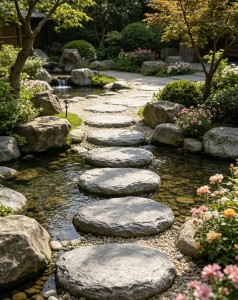
Step stones are the simplest form of garden paving — individual stone slabs placed with gaps between them, allowing grass, moss, or gravel to grow through the spaces. They serve a straightforward purpose: creating a walkable path across lawn or gravel, keeping shoes clean in wet weather while preserving the natural texture of the ground.
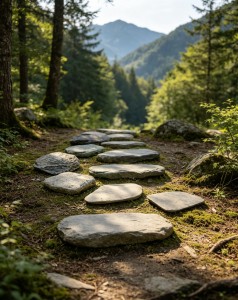
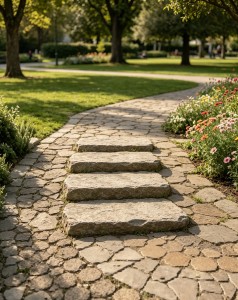
Three materials are commonly used. Granite offers high hardness and wear resistance, with a flamed surface finish for slip resistance. Slate, with its naturally cleft, textured surface, provides good grip even when wet. Its tones of dark gray and black blend well with vegetation. Quartzite matches granite in hardness and comes in a wider color range, from cool gray to warm gold, making it suitable where the stone itself is meant to be a visual accent.
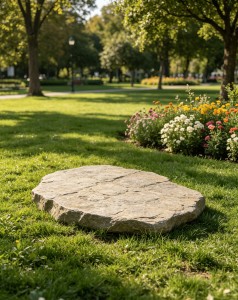
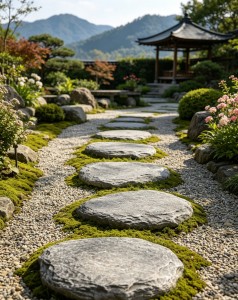
Typical sizes range from 300mm to 500mm square, with a thickness of 30mm to 50mm. Spacing is generally around 150mm to 200mm — roughly one step apart. Installation is straightforward: place each slab along the walking route. On lawns, stones sit flush with the grass; in gravel areas, slightly above. Gaps can be planted with low ground cover or left open for grass to spread naturally.
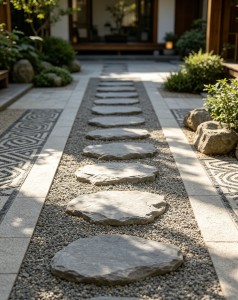
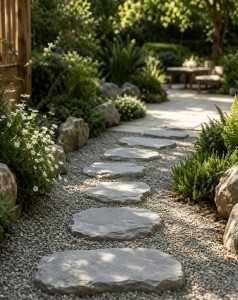
Suitable for private gardens, park pathways, and stepping stones across shallow water features. No foundation work, no concrete — simply set the stones firm. The task is simple: let people walk through, shoes clean, grass intact.
Written By Clara Luo.
Post time: Jun-04-2026