


When selecting stone for a high-end project, the specifier’s decision between natural granite and engineered quartz carries significant technical weight. Both materials have their place, but in applications where longevity, thermal performance, and authentic aesthetics are non-negotiable, granite consistently stands apart. Here is why.
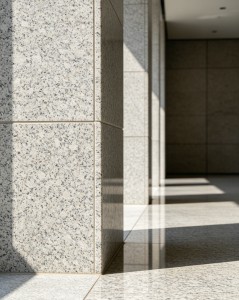
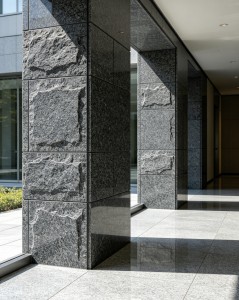
Heat resistance: a clear technical boundary
Engineered quartz typically contains 7–10% polymer resin. These binders begin to degrade at sustained temperatures above 150°C (300°F), leading to discoloration, surface dulling, and in some cases, structural stress. Granite, formed through magmatic crystallisation at temperatures exceeding 700°C, suffers no such limitation. A hot pan, a pizza stone straight from the oven, or a baking tray placed directly on the surface — granite handles all without hesitation. In commercial kitchens, high-end residential islands, and fire-surround applications, this thermal tolerance often governs the specification decision.
UV stability and outdoor capability
Engineered stones, especially lighter colours, can yellow or fade when exposed to prolonged direct sunlight — a consequence of photo-oxidative degradation of the resin. Granite, having no organic binder, is dimensionally and chromatically stable under full UV exposure. This renders it the specifier’s first choice for outdoor kitchens, façade cladding, courtyard paving, and pool surrounds, where colour consistency over decades is expected.
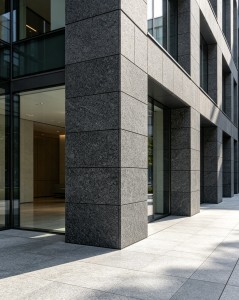
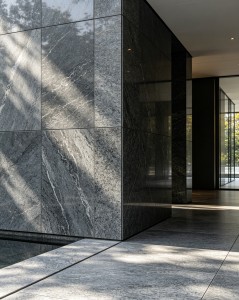
Texture, depth, and authenticity
Every slab of granite is unique: quartz, feldspar, and mica form crystalline patterns shaped over millions of years. This visual depth, with light scattering across interlocking crystals, cannot be reproduced by engineered aggregate compression. For architects seeking to communicate permanence, material honesty, and geological narrative, granite provides an expressive palette that no factory process can duplicate.
Longevity and repair in situ
Granite surfaces — in place for centuries in monuments and historic buildings — can be re-polished, re-honed, and even resin-treated in place to restore their original finish. Engineered surfaces, once deeply scratched or chemically damaged, typically require full replacement. For high-traffic lobbies, hospitality countertops, and luxury residential projects with projected 30-year lifecycles, this repairability lowers the whole-life cost and reduces material waste.
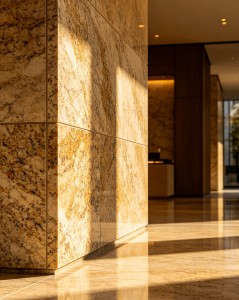
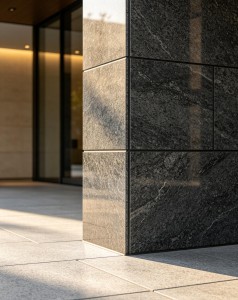
A rational specification choice
For interiors and moderate-use areas, engineered quartz offers design consistency and low initial maintenance. But when specifications demand high heat resistance, outdoor durability, irreplaceable natural character, and the capacity for on-site restoration, granite remains the benchmark. The geological archive is a library with infinite editions; each slab is a page no machine can reprint.
Written By Clara Luo.
Post time: May-09-2026