


Pebbles serve both functional and decorative purposes in horticulture and landscape construction. Proper sizing and correct installation directly affect performance and long-term maintenance.
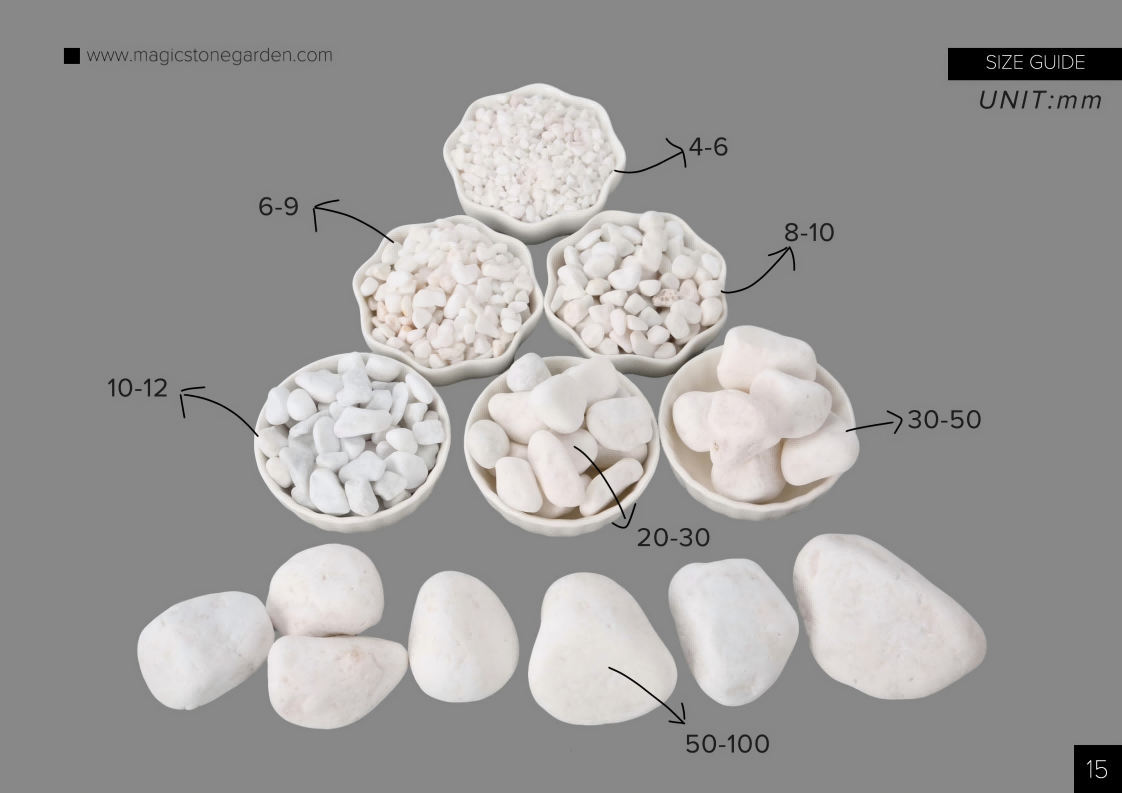
1. Size Classification and Application
0.5–1 cm Small Grade
Application: Indoor potted plant top-dressing, succulent arrangements, orchid pot covers.
Installation Depth: 2–3 cm layer.
Function: Provides a neat appearance without crowding plant stems. Reduces surface evaporation and prevents soil splash during watering.
1–3 cm Medium Grade
Application: Commercial lobby planters, large indoor containers, hotel entrance beds.
Installation Depth: Minimum 4 cm layer.
Function: Balances visual uniformity and practical stability. Covers exposed soil effectively and withstands minor air currents in public areas.
3–5 cm Large Grade
Application: Outdoor garden paths, water feature edges, rain gardens, dry landscape gardens.
Installation Method: Embedded or loose-laid depending on the substrate.
Function: Offers structural stability and natural slip resistance for foot traffic. Resists water erosion and creates a natural riverbed texture.
5–10 cm Extra-Large Grade
Application: Drainage layer at the base of pots and planters.
Installation Depth: 3–5 cm layer at the bottom.
Function: Creates a void space that prevents soil from blocking drainage holes. Ensures rapid water evacuation and reduces the risk of root rot.
2. Installation and Maintenance Essentials
Quantity Estimation: Area (sqm) × Depth (m) × 1.6 = Tonnage required. Example: A 0.5 sqm area at 3 cm depth requires approximately 24 kg of pebbles.
Weed Prevention: For outdoor applications, install a geotextile fabric layer beneath the pebbles. This blocks sunlight to suppress weed growth and prevents sinking into the soil.
Routine Care: Rinse dust and debris with a gentle water spray. For algae removal, scrub with diluted sodium hypochlorite solution and rinse thoroughly.
Written By Clara Luo
Post time: Apr-17-2026