


The value of a stone carving lies not only in the material and craftsmanship, but also in the cultural memory it carries. The owl happens to be one of the few birds taken seriously by both Eastern and Western civilizations.
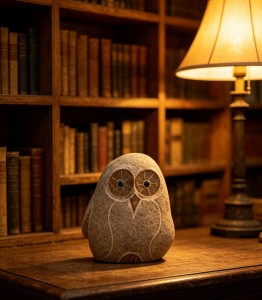
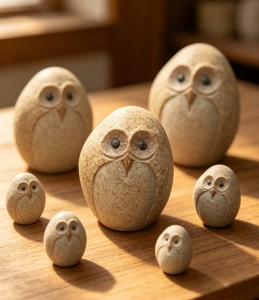
On ancient Greek silver coins, the owl was stamped as the companion of Athena — a symbol of reason and clarity, capable of seeing through fog and falsehood. Merchants carried it on long voyages, philosophers kept it close during debates. In the East, the owl was called the "night cat," believed to guard old homesteads through the long, dark hours. It made no sound, yet its presence meant safety and a quiet household. Two continents, no communication between them, and still they arrived at the same understanding: the owl is the one creature that stays clear-eyed in the dark.
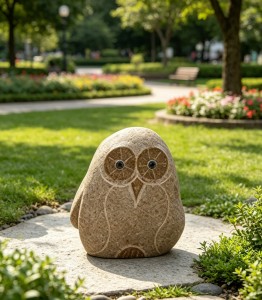
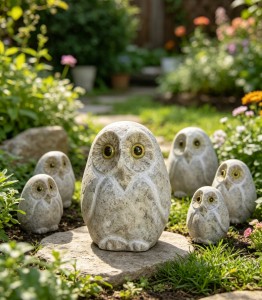
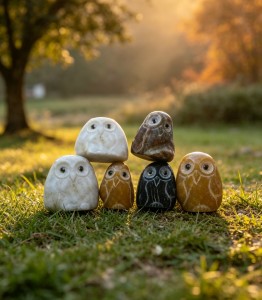
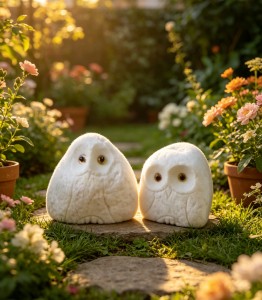
This shared cultural instinct is exactly what gives an owl stone carving its weight. Western classical sculpture tends toward realism — every feather, talon, and beak carefully rendered. Eastern craftsmen, by contrast, focus on spirit over detail. The body is carved round and solid, the outline established in just a few cuts. All the real effort goes into the eyes: a subtly convex curve, a black agate pupil, a fine incised line tightening the gaze. The result is a look that is steady and deep, neither fierce nor timid. Two very different approaches, yet both know that the soul of the owl is not in the feathers — it is in the eyes.
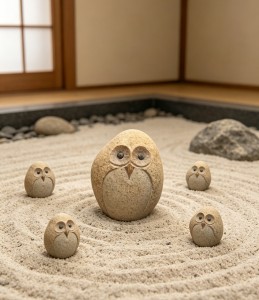
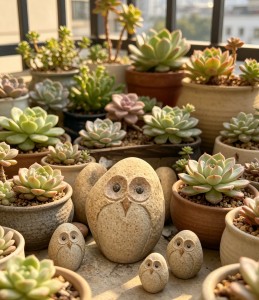
A piece like this starts as raw stone pulled from a riverbed or mountainside. It ends as a form refined by thousands of years of cultural instinct, concentrated by decades of a craftsman's skill. Placed on a desk, it is more than a decorative object. It is a piece of memory you can look back at — and one that looks quietly forward with you.
Written By Clara Luo.
Post time: May-15-2026