


The stone lantern is one of the most distinctly oriental elements in a garden. Traditional stone lanterns rely on candlelight or wired electricity — the former requires manual lighting, the latter demands wiring work. The solar stone lantern solves both problems: it stores energy during the day, switches on automatically at night, needs no wiring, and generates no electricity bill.
How a Solar Stone Lantern Works
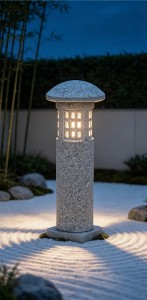
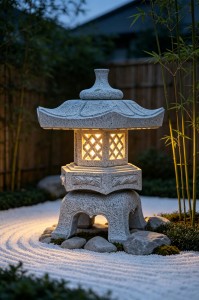
The core components of a solar stone lantern are the photovoltaic panel, the rechargeable battery, and the LED light source. During the day, the panel converts sunlight into electrical energy and stores it in the built-in battery. When the ambient light dims to a certain level, the control chip automatically switches on the LED, and the light shines through the firebox openings of the lantern. The entire system operates independently, with no connection to the power grid.
The positioning of the photovoltaic panel is critical. Ideally, the panel should face due south and receive unobstructed sunlight all day — under trees, behind walls, or beneath eaves are not ideal locations. Some products on the market separate the panel from the lantern body, connecting them with an extension cable. This allows the lantern itself to sit in the shade while the panel is fixed in a sunny spot. This split design solves the shadow problem in many real garden situations.
Similarities and Differences from Traditional Lanterns
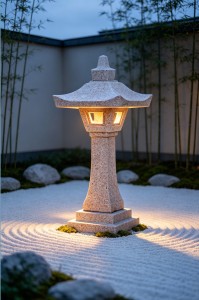
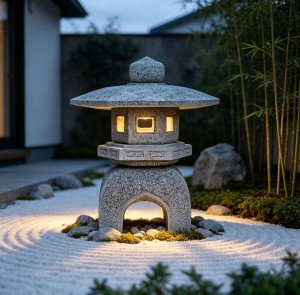
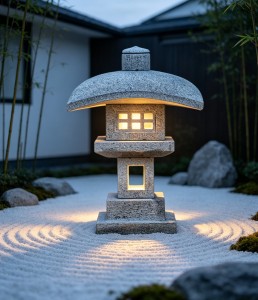
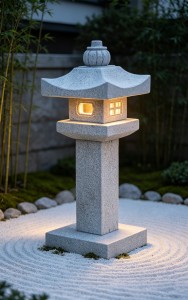
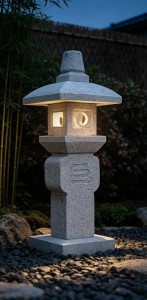
The shape of a solar stone lantern is essentially identical to that of a traditional one. It still uses natural granite for the body, and the light-and-shadow effect through the firebox openings retains the essence of the traditional design. The difference lies inside: where a traditional lantern would hold a candle or oil lamp, there is now an LED bulb and a wiring compartment. The base of the lantern usually has an access panel for battery replacement.
Traditional stone lanterns are about subtlety. Candlelight is limited in brightness — not enough to light a path, just enough to offer a soft point of light in the darkness. The LED brightness of a solar stone lantern is adjustable. Some products support two modes: low brightness with long battery life, and high brightness with shorter endurance. This allows users to choose according to the actual needs of their garden. Warm-white LEDs, with a colour temperature close to candlelight, reproduce the ambience of a traditional lantern reasonably well.

Key Points to Check When Buying
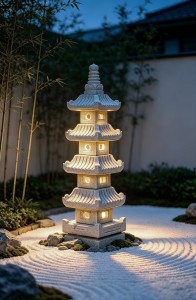
The first consideration is battery capacity and quality. The lifespan of a solar stone lantern depends heavily on its battery. A poor-quality battery will show noticeable decline in storage capacity after about a year. Replacement batteries are not expensive, but frequent replacement is a hassle. Batteries from well-known brands are usually easy to find on e-commerce platforms, while the battery specifications of unbranded products can be difficult to match. The second point is the conversion efficiency and waterproof rating of the photovoltaic panel. Outdoor products must withstand sun and rain, and the connection between the panel and the lantern body is the weak point where water can enter. Third is the drainage design of the lantern body. The interior needs reserved drainage holes to prevent rainwater from accumulating inside.
Suitable Applications
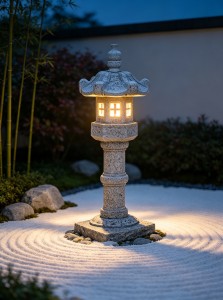
Solar stone lanterns are ideal for gardens where running electrical wiring is inconvenient but evening ambient light is desired. They work well as guide lights along paths, accent lights beside flower beds, or mood lighting around water features. If the goal is to illuminate the whole garden or serve as the primary light source, the brightness of a solar stone lantern is generally insufficient — it is best understood as a complement to functional lighting.
The application of solar energy to outdoor stone lanterns is, at its core, about giving a traditional form a more convenient heart. The stone is still stone, the firebox still a firebox — only the light has changed from the flicker of a kerosene flame to the steady glow of an LED. For clients who love the look of traditional stone lanterns but want to avoid wiring and electricity costs, the solar stone lantern offers a practical middle path.
Written By Clara Luo.
Post time: Aug-13-2026