


Slate is the most subdued member of the metamorphic rock family. Formed from shale under low-temperature and low-pressure metamorphism, it retains the most distinctive characteristic of sedimentary rock: distinct layering. Unlike shale, however, slate is harder and splits much more cleanly. The cleft surface reveals a natural, uneven texture — non-reflective and non-slip — making it a highly recognisable material for garden paving and wall cladding.
The colour range of slate is far broader than the "grey stone slab" most people picture. From cool to warm tones, different quarries and different mineral compositions give it a diverse appearance.
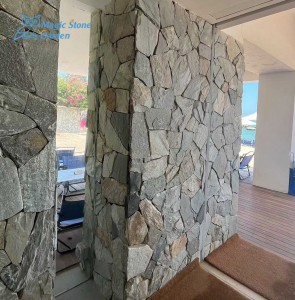
Blue-Grey and Dark Grey — The Classic Base Colours
The most commonly seen slate colours range from blue-grey to dark grey. This type of slate is rich in organic carbon and fine-grained pyrite, formed in a reducing geological environment. The tones lean cool, spanning from light grey to near-black. The "blue stone slabs" used to pave courtyards and build steps in traditional southern Chinese architecture are exactly this grey-toned slate. Its advantage lies in its versatility — it blends effortlessly with lawns, gravel, white walls, and timber structures, and never steals attention from the plants in a garden. A path or flight of steps paved in grey slate carries a natural sense of quiet composure.
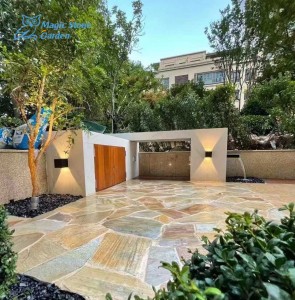
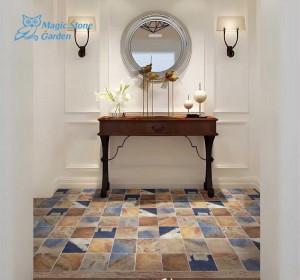
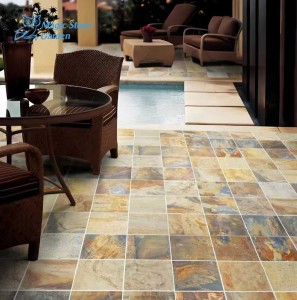
Rust and Red-Brown — The Signature of Iron Oxides
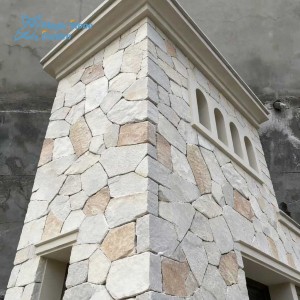
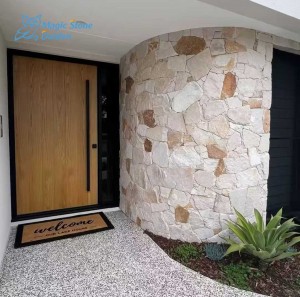
Some slate is rich in iron minerals such as hematite or limonite. In an oxidising environment, these produce a gradient from light rust to deep reddish-brown. This type of warm-toned slate is rich in colour gradation. A single slab may display overlapping streaks of rust, tan, and blue-grey — a record of subtle changes in mineral composition during the strata's deposition. Rust-coloured slate has a stronger presence in a garden than grey slate. It suits accent areas where a warm tone is wanted: steps beside autumn foliage, stepping stones in a gravel garden, or the facing of a low wall in a sunny spot.
Green Slate — The Product of Chlorite
Green slate is relatively rare within the slate family. Its green colour comes from chlorite — a green, platy silicate mineral formed during low-temperature, low-pressure metamorphism. The tone of green slate tends to be deep and restrained: dark green or grey-green. When polished, the surface reveals a fine, velvety texture. Green slate pairs exceptionally well with shade-loving plants such as moss and ferns. It is often used in Japanese gardens and naturalistic-style gardens as paving around a water basin or as path material under tree shade.
Purple and Variegated Slate — Manganese and Mixed Minerals
Some slate contains manganese, and manganese oxides produce purple tones in the rock. Purple slate is quarried in relatively small quantities and is more often sought after for high-end landscape projects. It is used as accent paving around water features or as decorative cladding in key areas. Multi-coloured slate commonly features a grey base overlaid with rust-coloured streaks, grey-green cloudy patches, and fine white quartz veins. Varieties rich in veining are often crafted into irregular stepping stones or natural-face feature wall stone.
How Surface Finish Affects Colour
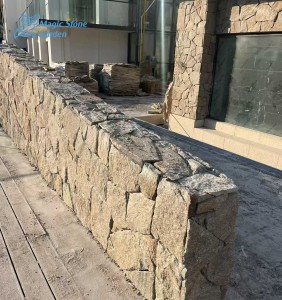
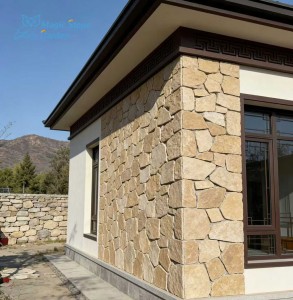
Slate commonly receives one of two surface finishes: natural cleft or honed. A natural cleft surface preserves the original split texture of the slate, and the colour stays closest to the rock's true tone, though it appears more matte and lighter because the rough surface scatters light. A honed finish is ground smooth, which deepens the colour noticeably and makes the veining sharper. Dry-hung wall cladding usually uses a natural finish to keep a rustic feel, while interior fireplace surrounds or feature walls often use a honed finish to highlight the slate's layered texture.
Choosing by Application
Dark grey and blue-grey slate are the safest choices for garden paving and are suitable for large areas. Rust and reddish-brown slate work well as visual accents or transition zones — a small amount, placed strategically, is enough. Green and purple slate are available in more limited quantities and appeal to clients seeking uniqueness and collectible quality; they are generally used in small accent areas or for distinctive single pieces. Slate lacks the dazzling lustre of granite, but its understated base tones — and the naturally uneven texture revealed when it is split — allow it to quietly play the most composed role in a garden.
Written By Clara Luo.
Post time: Aug-06-2026