


The quietest water in a garden is often held in a piece of stone.
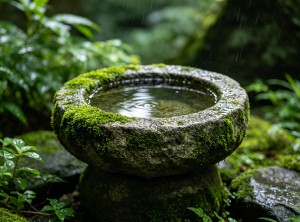
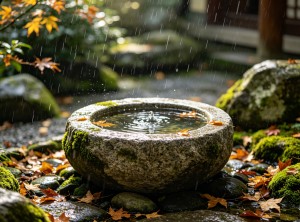
This is the water basin — a vessel carved from a single block of granite, with a round mouth and shallow belly, simple in form. Its predecessor is the tsukubai of the Japanese tea garden, where guests would bend low to scoop water and rinse their hands before a tea gathering, setting aside status and worldly thoughts in that humble posture. When it made its way into Chinese gardens, the water basin kept this sense of ritual while gaining a more casual spirit: placed under the eaves to catch rain, tucked into a corner to host a few floating duckweeds, or left with nothing at all — just a basin of clear water, watching the light of the sky and the shadows of clouds drift slowly across its surface.
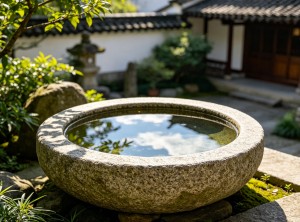
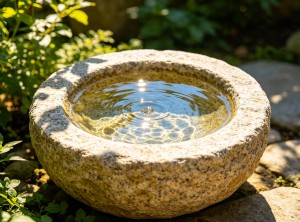
Granite is a natural choice for a water basin. The thick stone walls keep the sun at bay even in high summer, so the water inside always stays a few degrees cooler than anywhere else. When rain comes and the basin overflows, water spills gently over the rim, and over the years it leaves a dark stain down the side of the stone, like a brushstroke bleeding into rice paper. This is not a flaw. It is the texture that only time can give, growing more beautiful with age.
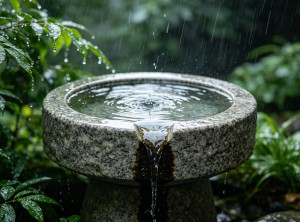
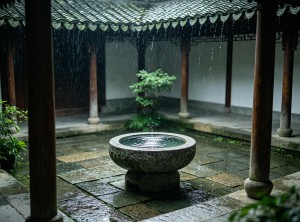
Moss tends to gather around a water basin. The rough stone surface is just the right grip for it, and a touch of rain brings it to life — a fine green fuzz framing the clarity of the water within. Murk and clarity side by side, they give rise to something close to a Zen riddle. Every now and then, a fallen leaf drifts into the basin, spinning lightly on the surface. Crouch beside it and watch for a moment, and the mind quiets down on its own.
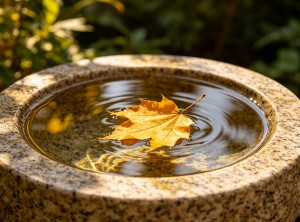
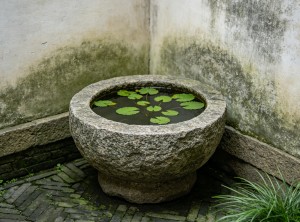
If a garden is a landscape in miniature, then a water basin is its hidden spring. It makes no sound, yet it gathers the light of the sky, the sound of rain, the falling leaves, and the traces of moss — all within a single stone hollow. It holds the quietest shape of time.
Written By Clara Luo.
Post time: May-28-2026