


Stone ornaments in a courtyard are not a case of "the more, the better." Few, but rightly placed, is what truly elevates the character of a space.
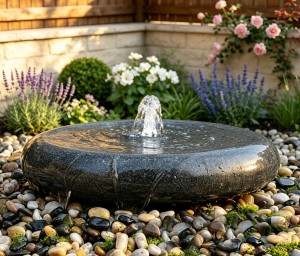
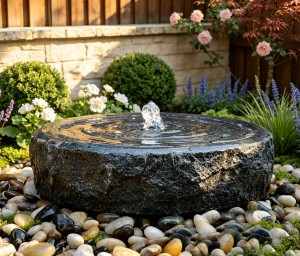
The first placement point is the entrance. The entrance to a courtyard is where the eye first falls, making it suitable for a stone ornament of moderate volume and clear form. Chinese-style courtyards often place a pair of stone lions or drum-shaped bearing stones at the entrance, drawing on their symmetrical, guardian meaning. Japanese-style courtyards more often feature a stone lantern or a water basin, setting the tone with quiet understatement. European-style courtyards may place a marble cherub or an abstract geometric sculpture. The role of the entrance stone is to establish the keynote — to tell the visitor what kind of character this space holds.
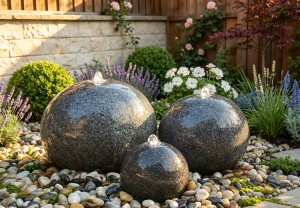
The second placement point is the center of the lawn or the endpoint of a sightline. The visual center of a lawn needs a piece capable of holding its own independently. A granite fountain is a classic choice: the water moves while the stone stays still, giving the entire space a sound and a focal point. Another option is an elephant or a large auspicious beast carving — products of this kind carry a strong sense of volume and are suited to becoming the visual anchor of a space. The approach is to first determine the best viewing angle from within the garden, and then decide which direction the sculpture should face — rather than simply setting the stone dead center and leaving it at that.
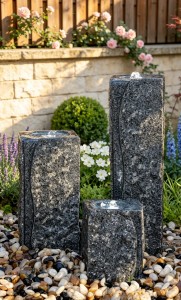
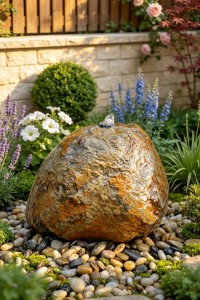
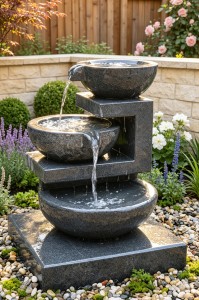
The third placement point is beside a wall under trees, or at the turn of a small path. These spots suit smaller, gentler animal carvings — an owl perched on the low wall outside a study window, a pelican tucked beside a flower bed, a small dog lying at the bend of a path. These ornaments need no great volume. Their role is to create an unexpected delight. A guest reaches a corner and suddenly finds a small stone dog resting quietly beside a shrub — this feeling, more than any central fountain, is what truly moves people.
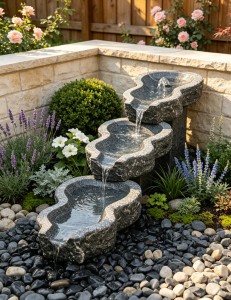
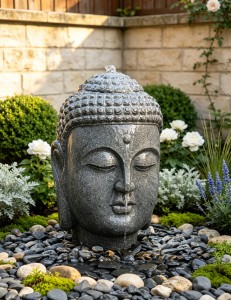
One final note: stone ornaments need breathing room around them. The presence of a stone carving comes, to a large extent, from the empty space that surrounds it. Do not bury a stone carving in dense flower clusters, nor crowd it among disorderly furniture. Give the stone space to breathe, and it will naturally hold the entire courtyard together for you.
Written By Clara Luo.
Post time: Jul-03-2026