


The earliest human contact with stone was for survival. Paleolithic chipped stone tools were used for cutting and hunting; Neolithic polished stone axes served for felling and farming. But it was also during the late Neolithic that some stones began to shed their purely practical functions and move toward decoration and symbolism.
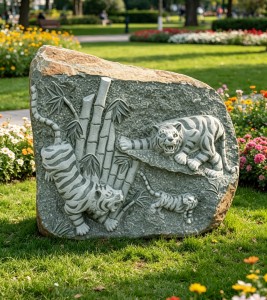
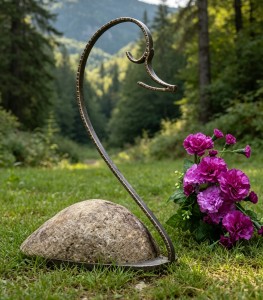
From Utility to Ornament
Archaeological discoveries show that as early as over eight thousand years ago, Chinese ancestors were already crafting stone ornaments. The Xinglongwa culture site has yielded jade slit rings, jade tubes, and stone beads — polished smooth and pierced with fine holes, clearly intended for wearing. Likewise, the jade pig-dragons of the Hongshan culture and the jade cong and bi discs of the Liangzhu culture, though possessing ritual and ceremonial functions, had forms and polishing techniques that reached far beyond mere utility. Stone was no longer just a tool; it began to carry belief, status, and aesthetic sensibility.

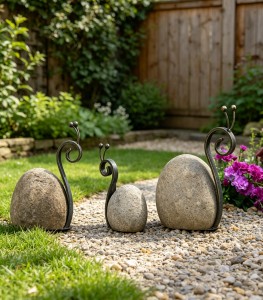
Stone Carving in Early Civilizations
The ancient Egyptians carved colossal statues and obelisks from granite and limestone. The Mesopotamians sculpted standing figures of rulers from diorite. The ancient Greeks used marble to carve their gods and heroes with rigorous proportion. In China during the Shang and Zhou dynasties, carved stone auspicious beasts began to appear in palaces and tombs. The stone tigers and oxen unearthed at Yinxu in Anyang are robust and archaic in style — already fully independent sculptural works. In the same period, the Maya civilization erected intricately carved stelae and altars in the jungle.
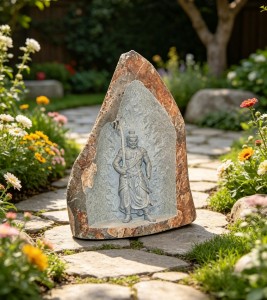
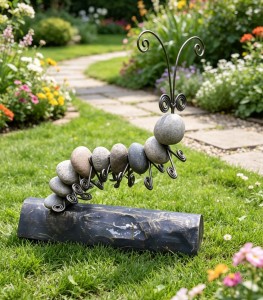
From Temples to Daily Life
The early history of stone carving revolves almost entirely around religion and royal authority. But from the Tang and Song dynasties onward, Chinese stone carving gradually entered the realm of common life. Stone lions moved from tomb spirit paths to the gates of private homes. Stone lanterns shifted from Buddhist temple offerings to garden accents. Stone basins, stone tables, and stone stools became ordinary furnishings in gardens. By the Ming and Qing dynasties, small stone carvings made their way into the scholar's study. Literati began placing a Guanyin figure on their desks or handling a stone inkstone. Stone decorative objects had descended from the altar into everyday life.
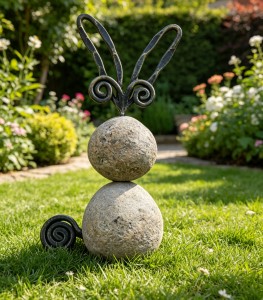
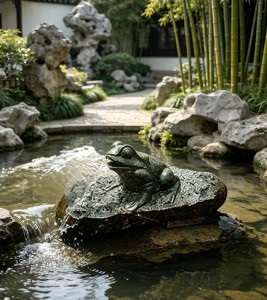
The Universality of the Material
The reason stone could become a medium of decoration across different civilizations, independently and in parallel, is simple: it is everywhere, and it resists time. Every civilization could find a local stone; every era could shape and polish it with the technology at hand. From the granite temples along the Nile to the bluestone lanterns in a Jiangnan garden, and to the granite flower pots on a modern balcony — humans have been doing the same thing all along. Taking stone from the earth, giving it form and meaning, and then letting it return to daily life.
Written By Clara Luo.
Post time: Jun-11-2026